A Patient’s Journey from Hand Weakness and Walking Difficulty to Recovery
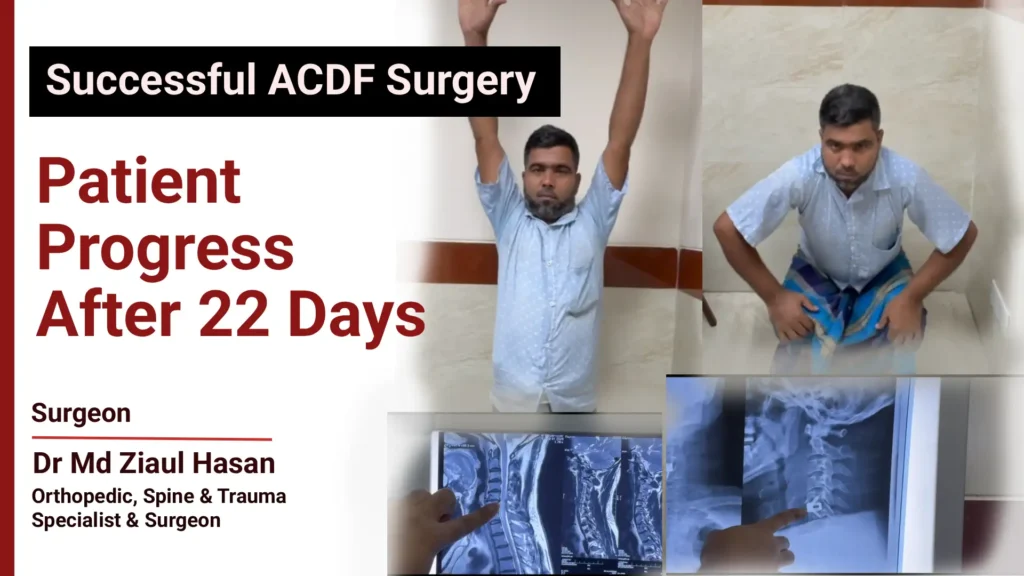
A male patient, age 50, suffering from severe cervical myelopathy caused by a C5-C6 disc prolapse recently underwent successful ACDF surgery in Dhaka under the care of spine surgeon Dr. Ziaul Hasan.
Before surgery, the patient experienced progressive weakness in both the hands and legs. Simple daily activities became increasingly difficult, and walking was affected due to pressure on the spinal cord. MRI findings revealed significant compression of the cervical spinal cord along with signs of myelomalacia, indicating changes within the spinal cord caused by prolonged compression.
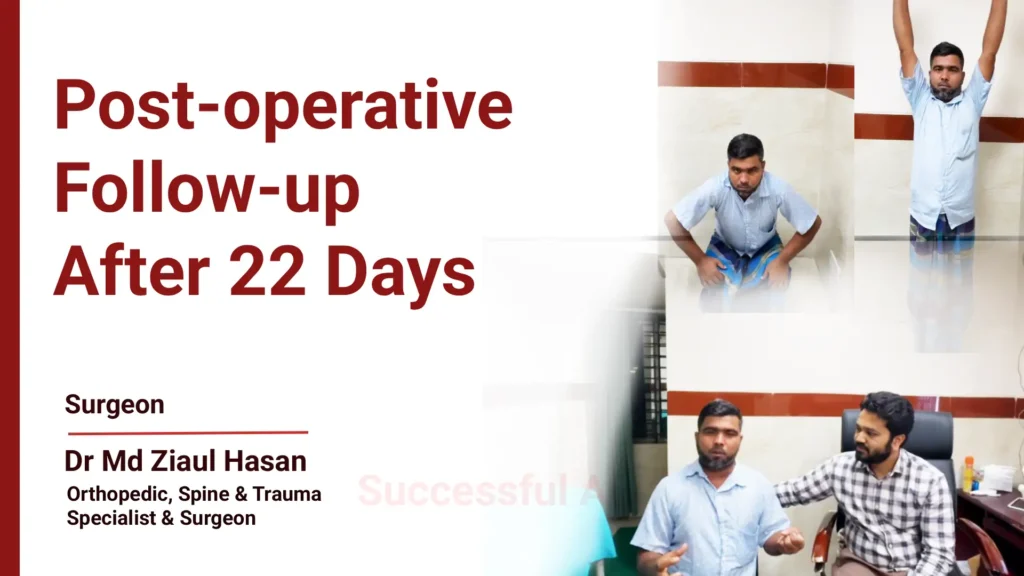
Following surgery, the patient reported improved walking ability, reduced hand tightness, and increased strength within just 22 days.
Understanding the Diagnosis: Cervical Myelopathy
Cervical myelopathy is a serious condition that occurs when the spinal cord in the neck becomes compressed. This compression can develop due to cervical disc herniation, spinal degeneration, bone spurs, or narrowing of the spinal canal.
Because the spinal cord carries signals between the brain and the rest of the body, prolonged pressure can cause neurological symptoms such as:
- Weakness in the hands
- Difficulty walking
- Loss of balance
- Hand stiffness or tightness
- Numbness in the arms or legs
- Reduced coordination
If left untreated, cervical myelopathy may lead to permanent neurological damage.
MRI Findings: Severe C5-C6 Disc Prolapse with Spinal Cord Compression
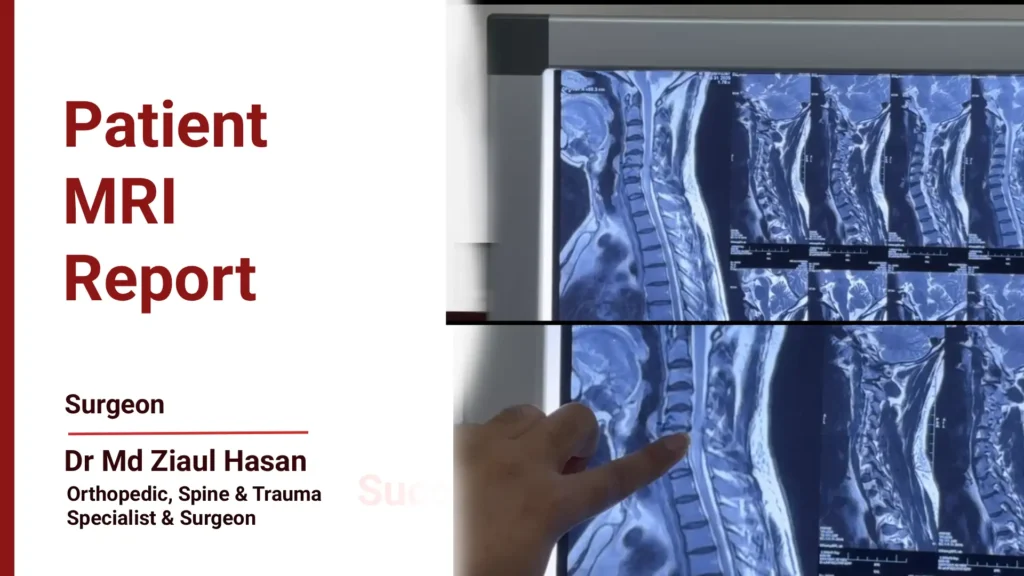
The patient’s MRI scan revealed a significant C5-C6 disc prolapse.
The damaged disc had protruded backward and was placing severe pressure on the spinal cord. More importantly, MRI findings showed evidence of myelomalacia—a condition that indicates structural changes within the spinal cord resulting from long-term compression.
Key MRI Findings
- C5-C6 disc prolapse
- Severe spinal cord compression
- Cervical myelopathy
- Signs of myelomalacia
- Weakness affecting both upper and lower limbs
Due to the severity of spinal cord compression and the presence of neurological symptoms, surgery was recommended to prevent further deterioration.
Why Surgery Was Necessary
Unlike simple neck pain caused by a disc problem, cervical myelopathy directly affects the spinal cord.
When MRI shows spinal cord compression along with myelomalacia, delaying treatment may increase the risk of permanent neurological deficits.
In this case, surgical decompression was advised to:
- Remove pressure from the spinal cord
- Prevent further spinal cord damage
- Improve strength and mobility
- Restore stability of the cervical spine
ACDF Surgery Performed in Dhaka
To treat the condition, Dr. Ziaul Hasan performed Anterior Cervical Discectomy and Fusion (ACDF), one of the most commonly performed procedures for cervical disc disease and cervical myelopathy.
During the surgery:
- The damaged C5-C6 disc was removed completely.
- Pressure on the spinal cord was relieved.
- The compressed spinal cord was fully decompressed.
- A modern stand-alone titanium cage was inserted between the vertebrae.
- Stability of the cervical spine was restored.
The titanium stand-alone cage replaced the diseased disc and helped maintain proper alignment while supporting spinal fusion.
Recovery After ACDF Surgery
At follow-up approximately 22 days after surgery, the patient reported significant improvement compared to the preoperative condition.
Improvements Reported by the Patient
- Reduced hand tightness
- Improved walking ability
- Increased hand strength
- Better overall mobility
- Greater confidence in performing daily activities
When asked about his recovery, the patient stated that the tightness and weakness he previously experienced had improved substantially and that he was now able to walk more comfortably.
Advanced Spine Surgery Is Now Available in Dhaka, Bangladesh
Many patients in Bangladesh still believe that complex cervical spine surgery requires travel abroad for treatment.
In the past, patients with cervical myelopathy often sought treatment in countries such as India or Singapore. However, advances in spine surgery now allow procedures such as ACDF surgery to be performed successfully in Dhaka using modern surgical techniques and advanced spinal implants.
This case demonstrates that complex spinal cord decompression surgery can be performed effectively in Bangladesh with excellent outcomes when diagnosed and treated at the appropriate time.
Expert Opinion from Dr. Ziaul Hasan
According to Dr. Ziaul Hasan, cervical myelopathy is one of the most important conditions requiring early diagnosis because ongoing spinal cord compression can lead to irreversible neurological damage.
Patients experiencing symptoms such as hand weakness, difficulty walking, balance problems, or progressive numbness should seek evaluation by an experienced spine surgeon as early intervention often leads to better outcomes.
For a successful spine surgery, there is some key factors that a patient needs to consider before surgery. If you are interested to learn more about what determines a successful spine surgery, read this article below:
What Determines the Success Rate of Spine Surgery? A Spine Surgeon’s Perspective
Patient Case Summary
| Case Details | Patient Information |
|---|---|
| Condition | Cervical Myelopathy |
| Cause | C5-C6 Disc Prolapse |
| Symptoms | Hand Weakness, Leg Weakness, Walking Difficulty |
| MRI Findings | Severe Spinal Cord Compression with Myelomalacia |
| Procedure | ACDF Surgery |
| Implant Used | Stand-Alone Titanium Cage |
| Recovery | Improved Strength and Walking Within 22 Days |
| Location | Dhaka, Bangladesh |
| Surgeon | Dr. Md Ziaul Hasan |
Visit: How a 20-year-old female patient recovered within 2 days of surgery.
Frequently Asked Questions
What is cervical myelopathy?
Cervical myelopathy is a condition where the spinal cord becomes compressed in the neck, causing weakness, numbness, balance problems, and walking difficulties.
What is ACDF surgery?
ACDF (Anterior Cervical Discectomy and Fusion) is a surgical procedure used to remove a damaged cervical disc, relieve spinal cord pressure, and stabilize the spine.
Can C5-C6 disc prolapse cause weakness in the hands and legs?
Yes. Severe C5-C6 disc prolapse can compress the spinal cord and lead to weakness in both the upper and lower limbs.
How long does recovery take after ACDF surgery?
Recovery varies between patients. Many patients begin noticing improvements in symptoms within weeks, while neurological recovery may continue for several months.
Is ACDF surgery available in Dhaka?
Yes. ACDF surgery is available in Dhaka and is used to treat conditions such as cervical disc herniation, cervical myelopathy, and spinal cord compression.
When should I consult a spine surgeon?
You should consult a spine surgeon if you experience persistent neck pain, weakness in the hands or legs, difficulty walking, numbness, balance issues, or MRI findings showing spinal cord compression.