Spinal deformities refer to abnormal curvature or misalignment of the spine that affects posture, balance, and overall body alignment. A healthy spine appears straight when viewed from the front and has natural curves when viewed from the side. When these curves become excessive, uneven, or abnormal, it is known as a spinal deformity.
Spinal deformities can occur:
From birth (congenital conditions)
During childhood or adolescence
In adulthood due to aging and degeneration
After trauma, infection, or untreated spinal conditions
Early diagnosis and proper management are important to prevent progression and long-term complications.
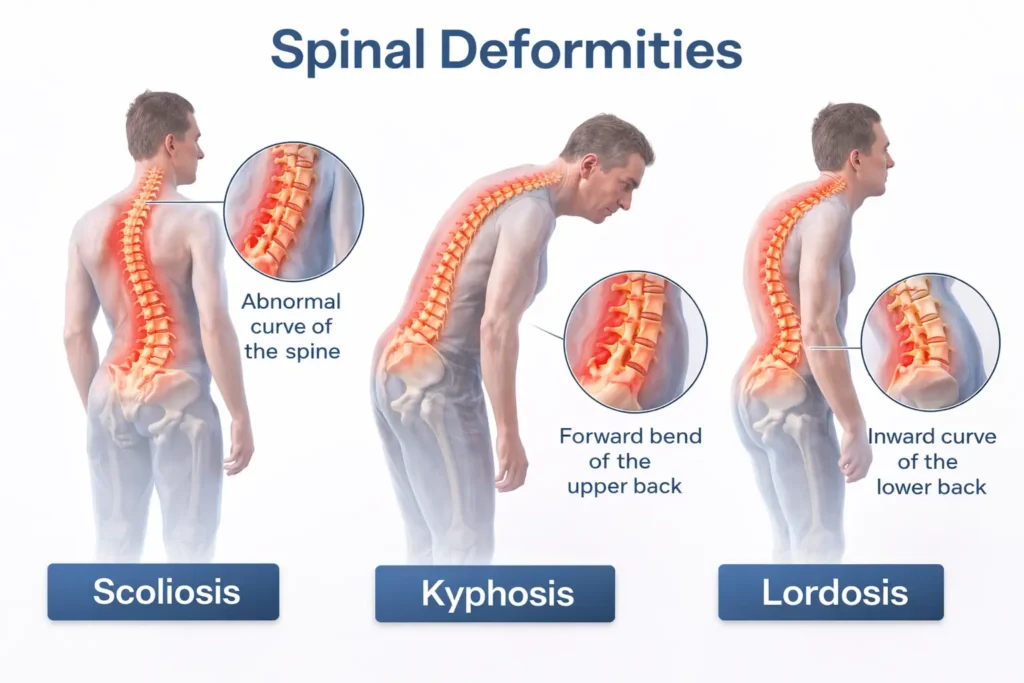
Some of the most common spinal deformities include:
A side-to-side curvature of the spine that may cause uneven shoulders or hips.
Excessive forward bending of the upper back, often resulting in a rounded or hunched posture.
An exaggerated inward curve of the lower back.
A combination of both scoliosis and kyphosis.
Develops later in life due to disc degeneration, arthritis, and weakening of spinal structures.
Symptoms may include:
Visible spinal curvature
Chronic back pain
Postural imbalance
Fatigue while standing
Reduced mobility
In severe cases, nerve-related symptoms
In the past, management of spinal deformities in Bangladesh often included:
Long-term pain medications
Basic physiotherapy
Use of braces in children
Large open spinal surgery with long recovery time
Limited advanced diagnostic facilities
Open deformity correction surgeries were more invasive and associated with greater blood loss and longer hospital stays.
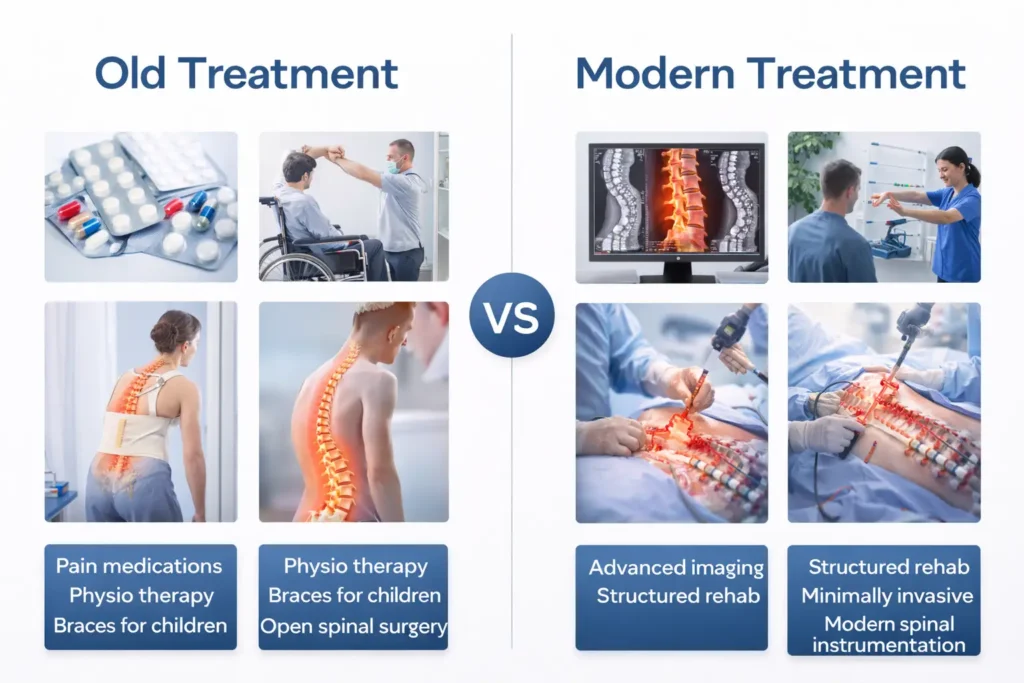
With advancements in spine care, treatment has become more precise and patient-focused.
Modern management includes:
Advanced imaging for accurate diagnosis
Regular monitoring for mild deformities
Structured rehabilitation programs
Minimally invasive spine techniques (when applicable)
Modern spinal instrumentation and correction surgery
Improved anesthesia and recovery protocols
Today, surgical correction of spinal deformities is safer and more effective, with better alignment correction and improved functional outcomes.
Surgery may be considered if:
The deformity is severe or progressive
Pain does not improve with conservative treatment
There is nerve compression
The deformity affects balance, walking, or breathing
Quality of life is significantly reduced
Not all spinal deformities require surgery. Proper evaluation by a spine specialist is essential.
Dr. Md. Ziaul Hasan, a spine specialist and orthopedic surgeon in Bangladesh, provides comprehensive evaluation and management of spinal deformities. With advanced training in modern spine surgery techniques, he focuses on accurate diagnosis, individualized treatment planning, and safe surgical correction when required.
Treatment decisions are made based on:
Patient age
Type and severity of deformity
Symptoms and functional limitation
Overall health condition
Early consultation helps prevent progression and reduces the need for complex corrective procedures.
Timely evaluation allows:
Slower progression of curvature
Better posture correction
Pain control
Improved long-term spinal health
Reduced risk of neurological complications
If you notice abnormal posture, uneven shoulders, or persistent back pain, early spine assessment is recommended.